



One Minute Summary
- Difference Between Habit vs Routine
- Habits: Automatic behaviors requiring minimal thought (e.g., brushing teeth).
- Routines: Intentional sequences of habits performed in a specific order (e.g., morning workout followed by coffee).
- Transforming Habits into Routines
- Habit Stacking: Combining related dailyhabits (e.g., drinking water followed by stretching).
- Repetition and reinforcement make habits more automatic.
- Impact of Habit Tracking
- Maintains accountability and measures progress using printable habit template, habit journal or habit tracker planner.
- Identifies patterns, celebrates successes, and pinpoints areas for improvement.
- Power of Small Habits
- 1% Rule: Small daily improvements can lead to significant progress.
- Snowball Effect: Small habits accumulate and gain momentum.
- Domino Effect: One small change can trigger additional positive behaviors.
- Identity Sculpting: How to Create a New Identity
- Redefines self through consistent actions aligning with desired self-image.
- Establish habits that support new identity (e.g., becoming a writer).
- Tracking Dailyhabits for Growth
- Types of habits to track: health-related, personal growth, productivity, mental well-being, and creative habits.
- Choose impactful habits that align with personal goals and start small for better adherence.
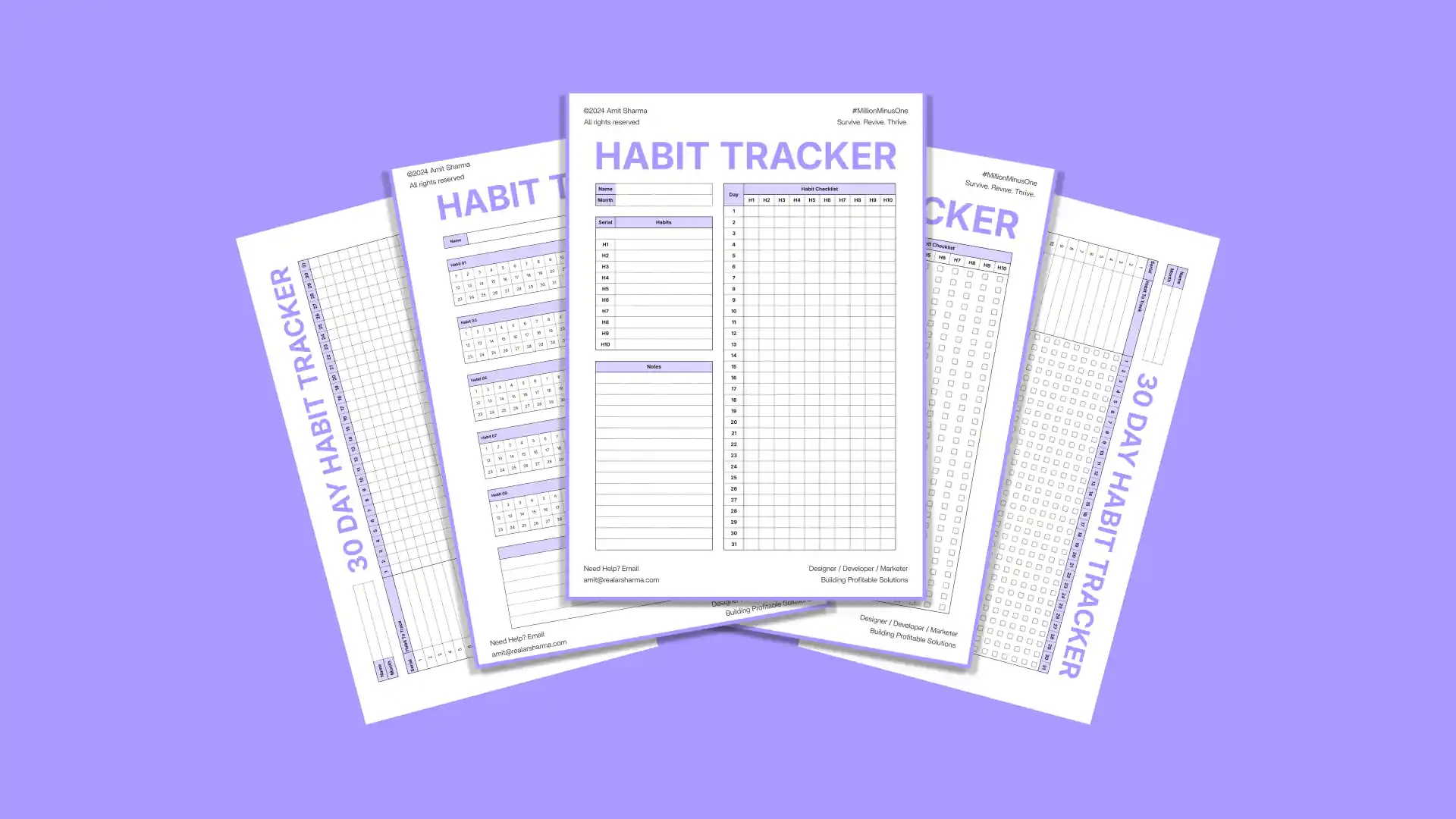
- Printable Habit Tracker Templates
1/ Habit vs Routine
A] Habits and Routines Defined
While the terms “habit” and “routine” are often used interchangeably, they have unique definitions and serve different purposes in our daily lives.
A habit is an automatic behavior that happens with minimal conscious thought—like brushing your teeth or taking a familiar route to work.
Routines, however, are intentional sequences of habits performed in a specific order, such as a morning workout followed by coffee and journaling.
B] How Habits Become Routines
For example, if you already have the habit of drinking a glass of water in the morning, you can stack it with another habit, like doing a five-minute stretch routine right afterward. By consistently performing these habits together, they gradually become a routine, making it easier to remember and execute them.
This transition from habits to routines occurs through repetition and reinforcement. As you repeatedly practice a sequence of habits, they become more automatic, and you start to rely on them as part of your daily structure. Over time, what began as a conscious effort to complete each habit can evolve into a fluid routine that you perform with little thought.
C] Impact of Dailyhabits Tracking
Tracking your habits is a powerful tool for maintaining accountability and measuring progress. By documenting daily actions, you can identify patterns, celebrate successes, and address areas for improvement.
Example: If you log your workouts, you might notice that your energy levels or mood improve on days when you exercise. By tracking, you might also identify specific workouts you’re skipping, helping you adjust your routine to include more balanced activities.
Habit tracking provides clear insights, helping you see where you’re consistent and how certain habits influence each other.
For Example: Recording your bedtime and wake-up time alongside a sleep quality rating can reveal connections between your sleep habits and energy levels. You might see that going to bed just 30 minutes earlier results in more productive mornings.
This self-awareness and regular feedback help refine habits, making it easier to achieve your goals over time. Tracking shortens feedback loops, which improves efficiency by allowing you to detect issues faster and implement changes more quickly.
D] The Power of Small Habits
Small habits are powerful because they’re easy to start and maintain. When we think of major changes, we often feel overwhelmed, but small habits allow you to inch toward big goals without feeling discouraged.
Small Habits Triggers
- 1% Rule: The 1% Rule suggests that making just a 1% improvement each day can lead to substantial progress over time. This means that by focusing on small, manageable habits, you can gradually enhance your overall performance and outcomes. For example, if you commit to reading just 10 more page each day, you could finish several books over the course of a year, significantly expanding your knowledge without the pressure of drastic changes.
- Snowball Effect: The Snowball Effect refers to how small actions can accumulate and gain momentum over time. Just as a small snowball rolling down a hill can grow larger as it collects more snow, small habits can lead to bigger successes. For instance, establishing a habit of exercising for just five minutes a day can eventually lead you to a full workout routine, as each successful day builds your confidence and commitment to the habit.
- Domino Effect: The Domino Effect describes how one small change can trigger a chain reaction of additional changes. When you implement a small habit, it can inspire other positive behaviors. For instance, if you start drinking more water each day, you may find yourself feeling more energized, which could motivate you to exercise more regularly and eat healthier meals. This interconnectedness of habits can lead to significant lifestyle improvements over time.
E] Using Both for a Balanced Life
Habits and routines, when used together, can be powerful tools for creating balance and achieving personal growth. Habits provide consistency, while routines add structure.
By tracking and refining your habits and routines, you can streamline your day, reduce decision fatigue, and align your actions with your goals. Embrace the balance between habits and routines, and enjoy the clarity and progress they bring to your life.
2/ Identity Sculpting: How To Create A New Identity
Identity sculpting, allows you to redefine yourself through small, consistent actions that support your desired self-image.
Creating a new identity isn’t just about making superficial changes; it’s about sculpting your habits and behaviors to align with who you truly want to become.
A] Habits as a Foundation for Identity
Our identity is shaped by the habits we cultivate. Every action we take reinforces how we see ourselves, whether we perceive ourselves as athletes, creatives, or lifelong learners. By focusing on the habits that reflect your desired identity, you lay the groundwork for lasting change.
For example, if you want to see yourself as a writer, establishing a daily writing habit is essential. These small habits not only reinforce your new identity but also create a sense of accountability to yourself.
B] DATA Techniques for Identity Sculpting
Step 1: Define Your Desired Identity
The first step in identity sculpting is to clearly define who you want to be. Take the time to reflect on your aspirations, values, and interests. What qualities or traits do you wish to embody? Write them down in detail.
For Example, if you desire to be a healthier person, visualize what that looks like—perhaps it includes being active, eating nutritious foods, and prioritizing mental well-being.
The clearer you are about your desired identity, the easier it will be to align your habits with this vision.
Step 2: Align Habits with Your Identity
Once you have a clear vision of your desired identity, the next step is to establish habits that support this new self. Choose small, manageable actions that you can integrate into your daily routine.
For Example, To support your new identity, you decide to: Start with a daily morning walk for 15 minutes. Prepare healthy meals on Sundays for the week ahead. Join a local fitness class twice a week.
By focusing on small, achievable habits, you set yourself up for success and gradually reinforce your new identity.
Step 3: Track and Analyze Your Progress
Tracking your habits is crucial for maintaining motivation and accountability. Use a journal or habit tracker app to document your daily actions and reflect on your progress. This practice not only keeps you accountable but also allows you to see how far you’ve come.
For Example, You use a habit tracking app to log your daily walks and any fitness classes you attend. You also note how you feel after each workout and any healthy meals you prepare.
Regular reflection helps you recognize patterns, celebrate successes, and identify areas for improvement. Consider weekly or monthly reviews to assess your growth and make necessary adjustments to your habits.
Step 4: Adjust and Reinforce Habit
As you progress, be open to adjusting your habits as needed. Life is dynamic, and your circumstances may change, requiring flexibility in your approach. If a particular habit isn’t working or aligns with your identity, don’t hesitate to modify it or replace it with something more fitting.
For Example, After a few weeks, you realize that the evening fitness class conflicts with your schedule. Instead, you adjust by attending a morning class that fits better with your routine.
The goal is to reinforce habits that genuinely support your desired identity. Over time, these adjusted habits will become second nature, further solidifying your new self-image.
C] Using DATA Techniques to Become a Healthier Person
- Define: You want to become a fitness enthusiast who prioritizes health and exercise. Visualize yourself waking up early for workouts and feeling energized throughout the day.
- Align: You commit to small habits like walking for 15 minutes each morning, preparing healthy meals on weekends, and attending a fitness class twice a week.
- Track: Use a habit tracker to log your daily walks, fitness classes, and healthy meals. Reflect on your progress at the end of each week, noting improvements in energy levels and overall well-being.
- Adjust: If your schedule changes, adapt your fitness class routine to attend a morning session instead of evenings. Celebrate milestones, like hitting a workout goal or trying a new healthy recipe, to reinforce your identity as a fitness enthusiast.
D] Transforming Yourself Through Small Changes
Identity sculpting is a transformative process that hinges on the small changes we make in our daily lives.
By defining your desired identity, establishing supportive habits, tracking your progress, and making necessary adjustments, you can reshape how you see yourself and, ultimately, how you live your life.
Remember, the journey to a new identity doesn’t happen overnight; it’s the cumulative effect of consistent, small changes that leads to profound transformation. Embrace the process, and watch as you bend reality to create the identity you’ve always desired.
3/ Types Of Habit To Track In Journal
Tracking your habits in a journal can help you maintain focus, stay accountable, and visualize your progress. Here are some key types of habits you might consider tracking:
A] Health-Related Habits
- Hydration: Record your daily water intake to ensure you stay adequately hydrated.
- Sleep: Track the duration and quality of your sleep to identify patterns and areas for improvement.
- Exercise: Log your workouts, including type, duration, and intensity, to stay motivated and monitor your fitness progress.
- Body Measurements: Track important metrics such as weight, body fat percentage, heart rate, and blood pressure.
B] Personal Growth Habits
- Reading: Note the books you read and the time spent reading each day to cultivate a habit of continuous learning.
- Journaling: Write about your thoughts, experiences, or feelings regularly to enhance self-reflection and emotional clarity.
- Gratitude: Keep a gratitude list to remind yourself of the positive aspects of your life and improve your overall mindset.
C] Productivity Habits
- Goal Setting: Write down short-term and long-term goals and regularly assess your progress toward achieving them.
- To-Do List: Maintain a daily or weekly to-do list to prioritize tasks and ensure you stay organized.
- Task Completion: Record tasks you complete daily to increase accountability and track your productivity levels.
D] Mental Well-Being Habits
- Reflection: Incorporate prompts in your journaling to assess your growth:
- What Went Well?: Identify the successes and positive experiences of your day or week.
- What Went Wrong?: Reflect on challenges or setbacks you encountered and consider their impact.
- What Could Be Improved?: Determine areas for improvement and actionable steps you can take moving forward.
- Meditation: Track your meditation sessions to promote mindfulness and reduce stress.
- Digital Detox: Log time spent on digital devices and aim for regular breaks to enhance your mental well-being.
E] Creative Habits
- Drawing: Keep a record of your creative endeavors, whether sketching or painting, to encourage artistic expression.
- Writing: Track your writing sessions, whether for personal projects or journaling, to build a consistent writing habit.
- Cooking: Document new recipes you try and the frequency of cooking at home to develop culinary skills.
By tracking these various types of habits, you can create a comprehensive overview of your daily behaviors, making it easier to identify areas for improvement and celebrate your progress over time.
4/ Choosing Which Dailyhabits To Track
- Align with Your Goals: Choose habits that directly support your personal goals. Whether it’s improving health, enhancing productivity, or fostering creativity, selecting habits that resonate with your aspirations will keep you motivated.
- Start Small: Begin with small, manageable habits that you can easily integrate into your daily routine. This makes it less overwhelming and increases your chances of sticking with them. For example, if you want to read more, start with just 10 minutes a day.
- Prioritize Impactful Habits: Focus on habits that can have a significant impact on your life. Identify which behaviors, when improved, can lead to the greatest overall benefit. For instance, developing a consistent sleep schedule can enhance your energy levels and productivity.
- Be Specific: Define clear and specific habits rather than vague intentions. For example, instead of saying “exercise more,” specify “walk for 30 minutes every morning.” This clarity helps you track progress more effectively.
- Consider Your Lifestyle: Choose habits that fit well with your existing lifestyle and commitments. Consider your daily routines, work schedule, and personal preferences to ensure that the habits you select are sustainable.
- Reflect on Past Experiences: Think about habits you’ve tried in the past—what worked and what didn’t? Use these insights to inform your choices and avoid repeating mistakes.
- Seek Balance: Aim for a balanced approach by selecting habits across different areas of life, such as health, productivity, and personal growth. This holistic view helps ensure well-rounded self-improvement.
- Test and Adjust: Be open to trying different habits and adjust as needed. If a habit doesn’t feel right or isn’t yielding the desired results, don’t hesitate to replace it with another that might be more effective.
- Stay Consistent: Consistency is key to building lasting habits. Commit to tracking your habits regularly to create a sense of accountability and reinforce your dedication to self-improvement.
- Celebrate Progress: Acknowledge and celebrate your achievements, no matter how small. Recognizing your progress can boost motivation and help you stay committed to your self-improvement journey.
By following these tips, you can effectively choose and implement key habits that will lead to meaningful self-improvement and help you achieve your personal and professional goals.
5/ Habit Journal/Tracker Template
Tracking your habits can significantly enhance your self-improvement journey. Here are various habit tracker planner, habit tracker examples and methods you can use for effective habit tracking:
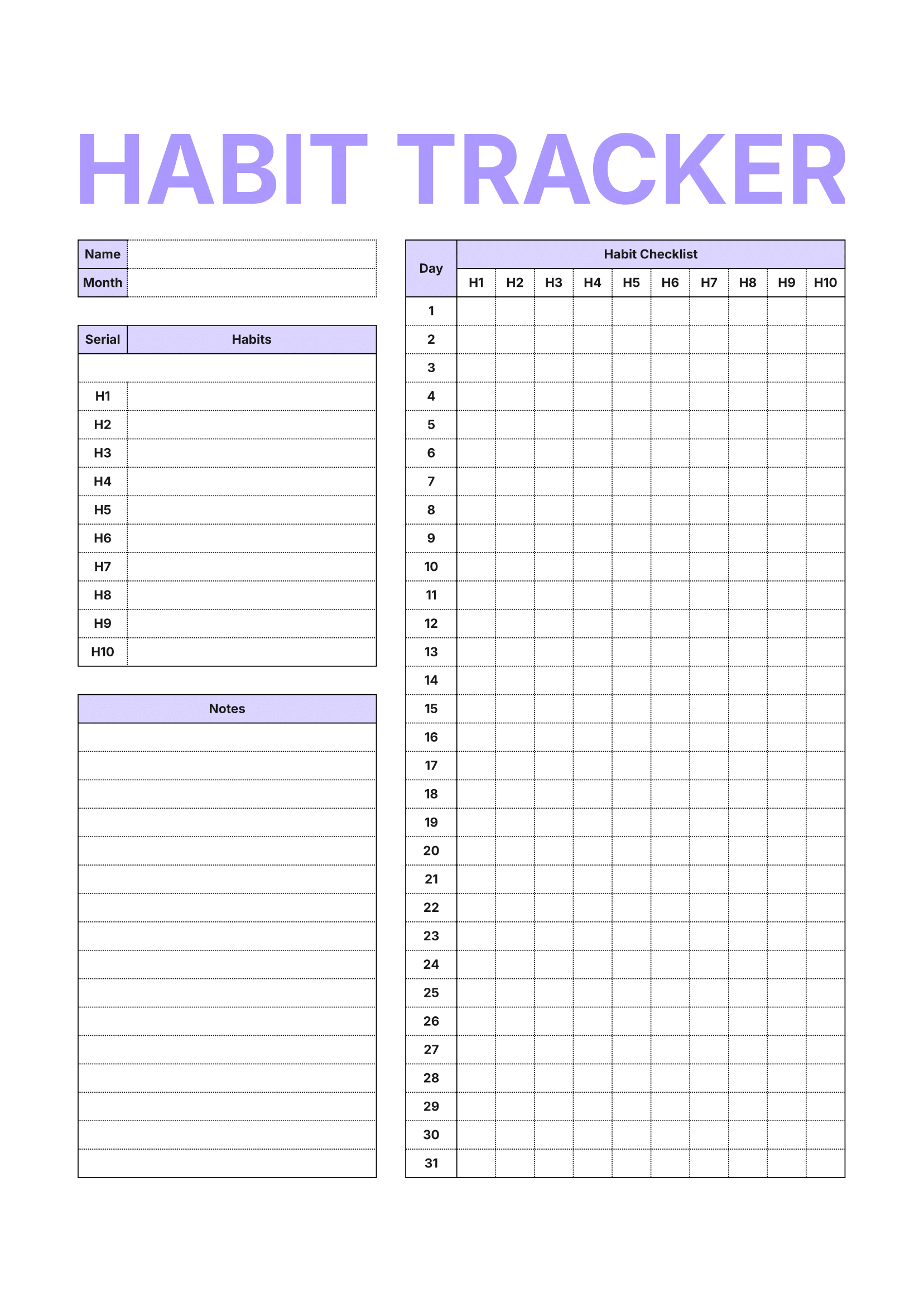
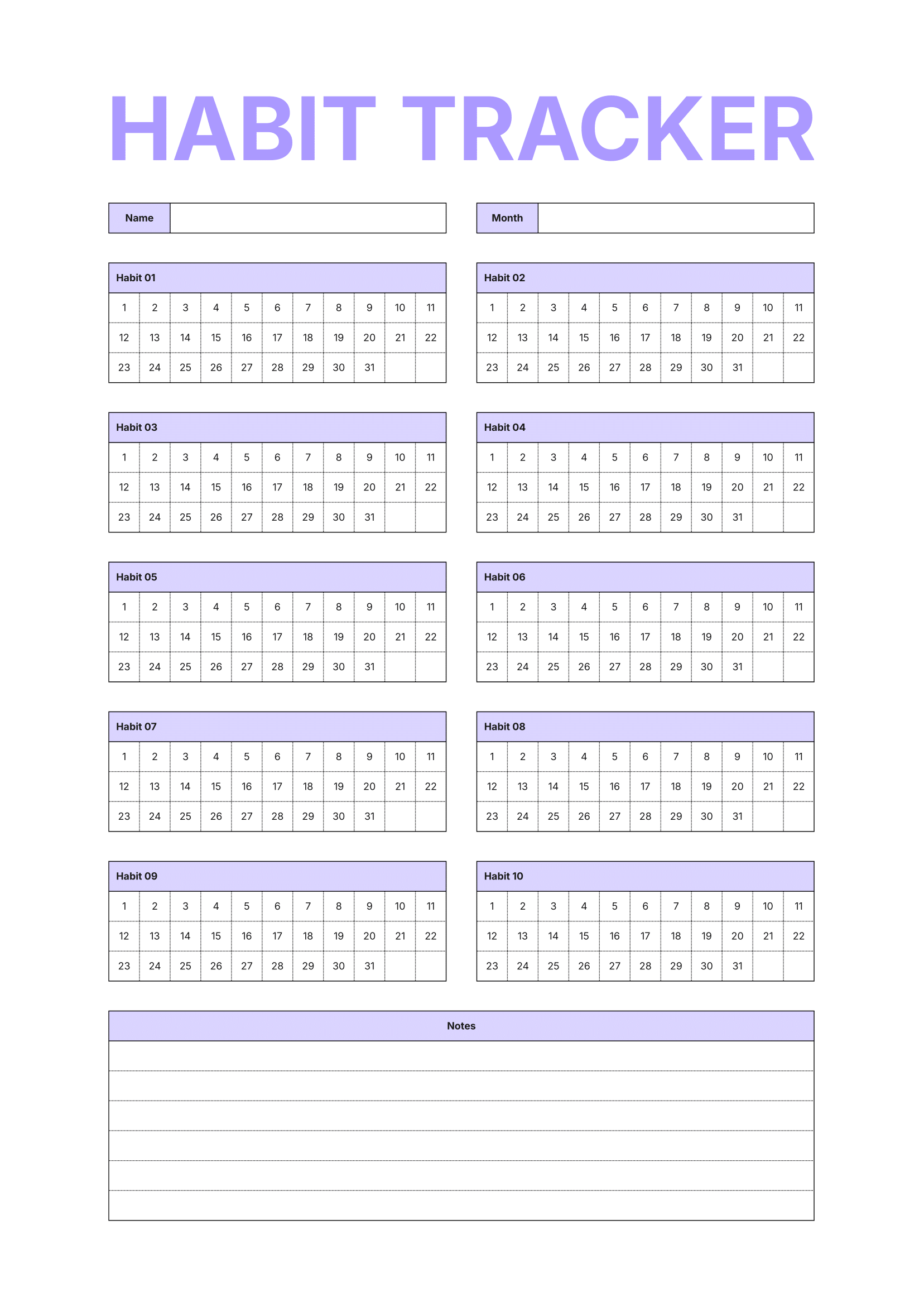
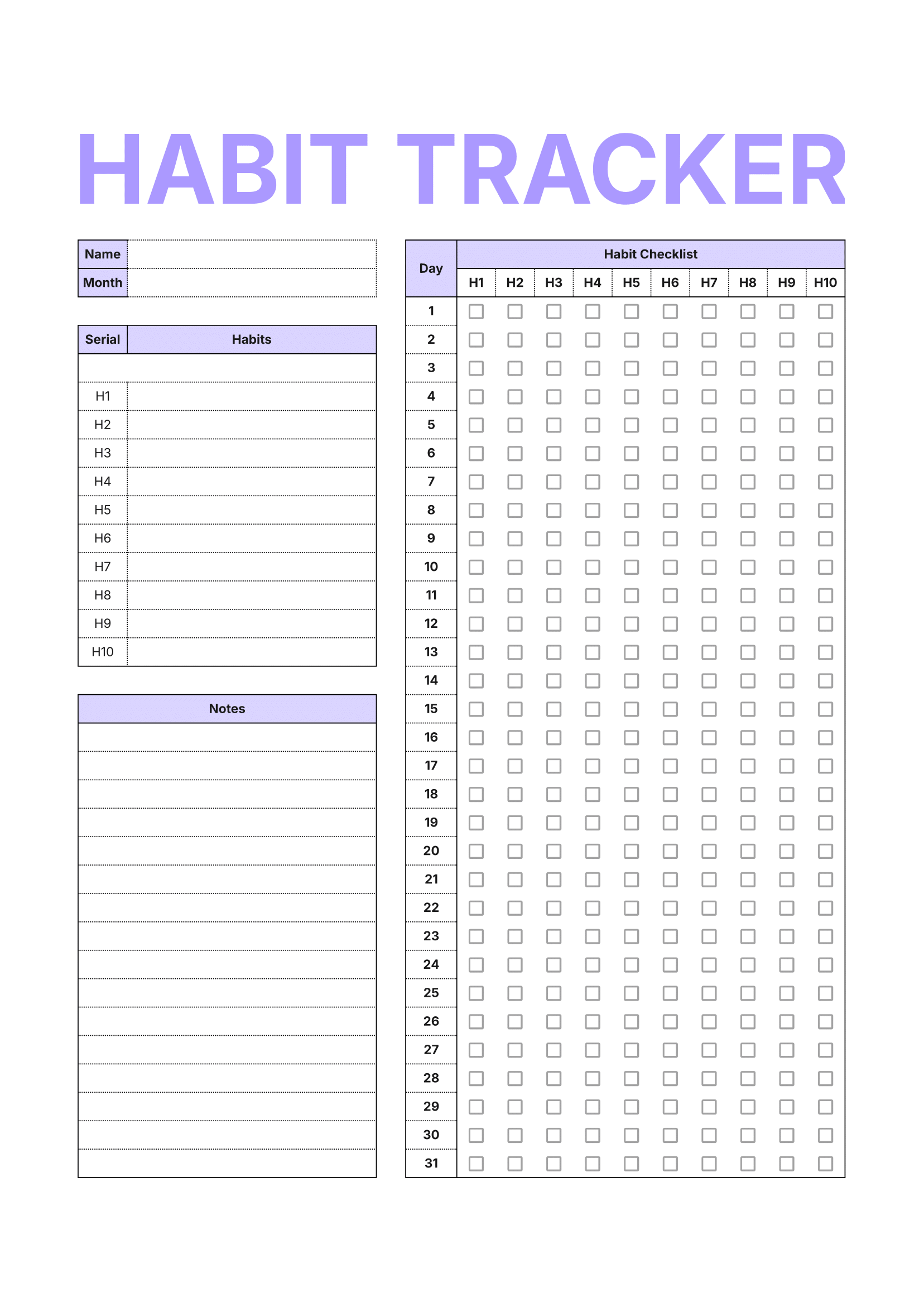
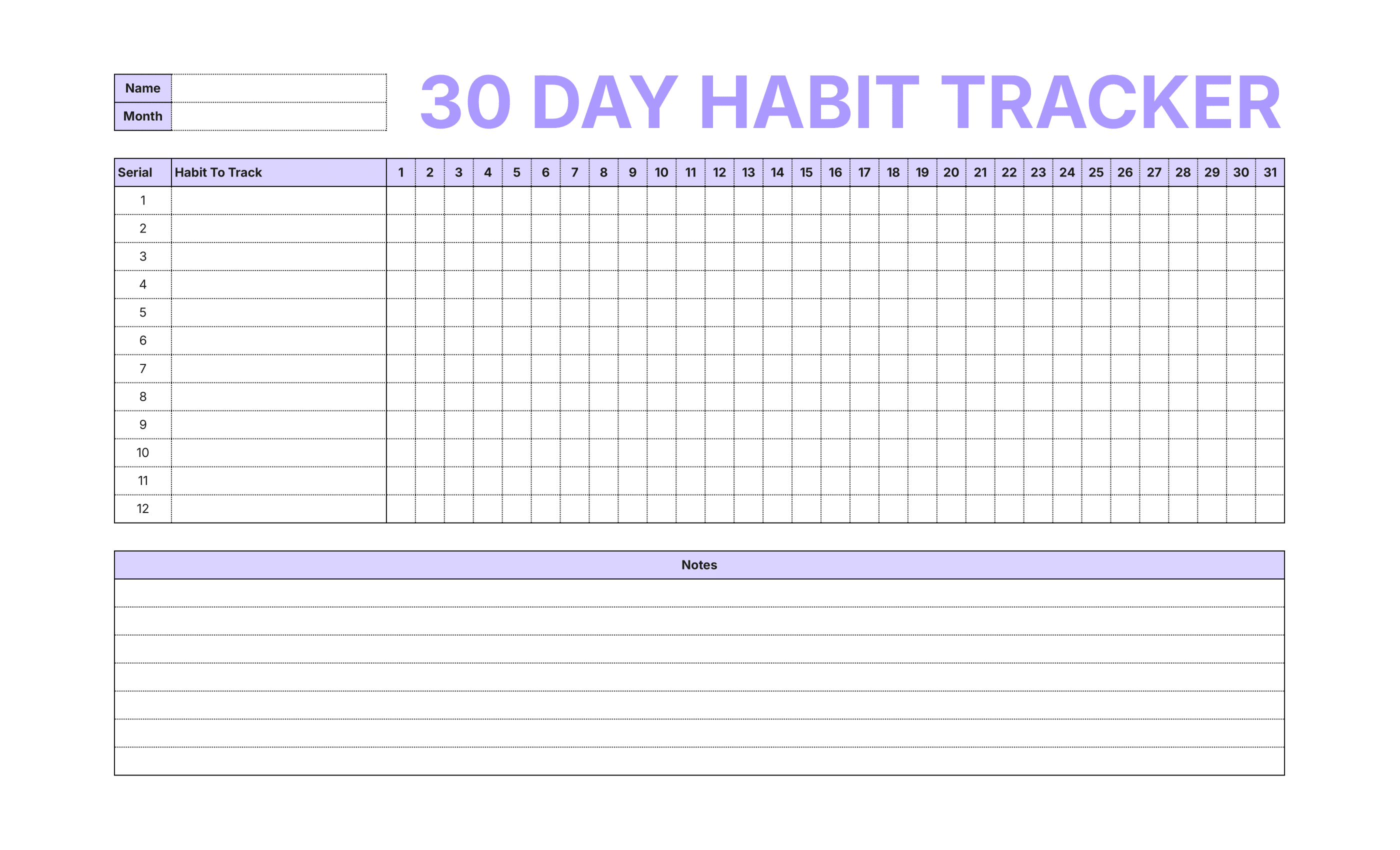
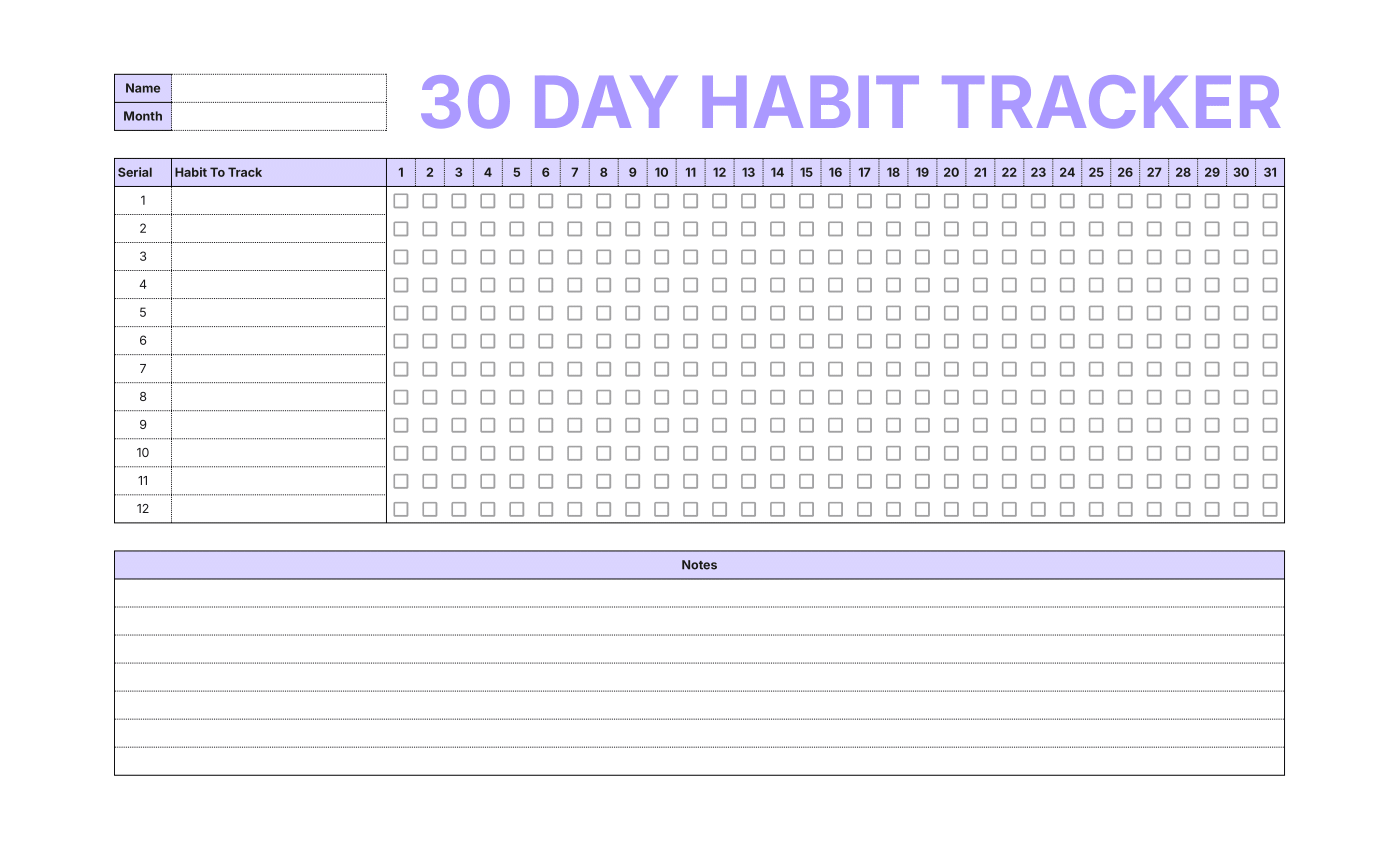
A] Printable Habit Tracker [Simple]
A simple, printable monthly tracker allows you to mark off daily accomplishments for each habit. This straightforward approach is ideal for those who prefer a physical method to visualize progress.
Pros:
- Easy to use and accessible
- Visual feedback with physical marking
- No tech skills needed
Cons:
- Limited data analysis capabilities
- No automated tracking
- Can be less engaging long-term
When To Use:
- Daily habit tracking for immediate feedback
- Ideal for visual learners and those who prefer physical interactions
B] Digital Excel Based Habit Tracker [Complex]
For those who enjoy working with spreadsheets, a digital Excel-based tracker can offer more complex functionalities, such as automated calculations and data summaries. This option is great for individuals who like detailed analysis of their habits over time.
Pros:
- Customizable formulas and calculations
- Automated data summaries
- Easy to visualize data trends
Cons:
- May require spreadsheet skills
- Potentially overwhelming for simple tracking
- Less visual appeal without customization
When To Use:
- Weekly or monthly summaries for analyzing trends
- Great for users who enjoy data management and analysis
C] Notion Based Habit Tracker [Comprehensive]
Notion users can create comprehensive habit trackers that integrate with other aspects of their life management. This approach allows for a highly customizable experience, enabling you to link habits to goals, projects, and other trackers within the platform.
Pros:
- Highly customizable and integrative
- Can link to projects and other databases
- Offers a variety of display options (tables, boards, etc.)
Cons:
- Requires learning to navigate Notion
- Can be complex to set up initially
- May feel cumbersome for users who prefer simplicity
When To Use:
- For long-term tracking and integration with other tasks/projects
- Best for users looking for an all-in-one productivity solution
D] Tracking In Binary, Number & Subjective Range
- Binary Tracking: Record whether you completed a habit (yes/no), providing a clear indication of consistency. Example: Let’s say one of the habits is to drink 8 glasses of water daily. At the end of each day, you simply mark “Yes” if you drank 8 glasses or “No” if you did not.
- Numerical Tracking: Assign a number to quantify progress, such as hours exercised or pages read. Example: If your goal is to exercise regularly, you could track the number of workouts you complete each week. At the end of each week, you log the total hours you spent exercising.
- Subjective Tracking: Use a subjective rating scale (e.g., 1-10) to assess how well you followed through with a habit. Example: If you want to monitor your mood or energy levels after exercising, you can use a subjective rating scale. After each workout, you rate your mood on a scale of 1 to 10, where 1 is very low energy/mood, and 10 is very high energy/mood.
E] Making Habit Tracking Fun And Easy
- Color-Coding to Differentiate Habits: Use colors to represent different habits, making your tracker visually appealing and easy to read. This can help you quickly assess which areas you’re focusing on.
- Assign Rewards for Streaks: Motivate yourself by setting up rewards for maintaining streaks in your habits. This can make the tracking process more engaging and encourage consistency.
- Share Your Progress: Engage with a community or share your progress with friends and family. Whether it’s through social media, a group chat, or an in-person meet-up, sharing your achievements can provide a sense of accountability and encouragement.
- Make It Easy: Simplify the tracking process by choosing a system that fits your lifestyle. Whether you prefer a digital app or a simple notebook, select a method that you can easily integrate into your daily routine.
- Customizing Dailyhabits Trackers: Tailor your habit tracker to suit your unique lifestyle and preferences. Whether you prefer digital or printable formats, ensure that your tracker aligns with your daily routine and makes it easy for you to stay accountable. You can browse habit tracker ideas, habits tracker printable templates or habit tracker coloring page templates for inspiration.
Action Plan for Implementing
Knowledge is powerful, but without implementation, it remains just entertainment. This action plan offers simplified steps to help you get started on your journey of self-improvement.
- Define Identity and Goals
- Identity: Reflect on the type of person you want to become (e.g., a healthy individual, a productive professional, a creative thinker).
- Goals: Identify specific goals that align with your desired identity and what you want to achieve through habit tracking (e.g., improve health, enhance productivity, cultivate creativity).
- Select Habits to Track: Choose 3-5 key habits that align with your goals and desired identity. Ensure they are measurable and impactful (e.g., drinking 8 glasses of water, exercising 30 minutes daily).
- Choose a Habit Tracker Templates: Select one of the free printable habit tracker templates for 2026 or create a digital tracker using apps like Notion or Trello.
- Create a Routine: Develop a daily routine that incorporates your selected habits. Use habit stacking to integrate new habits into existing routines.
- Set Up Habit Tracker Monthly: Establish a system to track your habits daily. This could involve checking off completed tasks, using stickers, or entering data in a digital tracker.
- Review and Reflect: Schedule weekly reviews to assess your progress. Reflect on what’s working, what’s not, and make adjustments as needed.
- Celebrate Milestones: Acknowledge small victories and milestones achieved through habit tracking. This can boost motivation and reinforce positive behaviors.
- Adjust as Necessary: If certain habits prove difficult to maintain, consider adjusting them to be more manageable or replace them with alternatives that better fit your lifestyle.
- Reassess Goals Periodically: Every month or quarter, revisit your goals and the effectiveness of your habit tracking. Make any necessary changes to your habits or tracking methods.
- Stay Committed: Maintain consistency and commitment to the habit tracking process. Remember that small changes lead to significant progress over time.
Don’t let hesitation hold you back from achieving your best self. Each step is designed to help you take actionable steps that align with your goals and identity. Let’s turn your aspirations into reality!
Frequently Asked Questions
What are some effective strategies for sticking to new habits?
To stick to new habits, try setting specific goals, using reminders, starting small, finding accountability partners, and celebrating small victories to maintain motivation.
Is there a recommended duration for tracking habits?
While there’s no one-size-fits-all answer, many people find tracking their habits for at least 21 to 30 days helps solidify them. However, tracking can continue as long as it helps you maintain your progress.
Should I track all my habits at once or start with a few?
It’s generally more effective to start with a few key habits to avoid overwhelm. Once you’ve established those, you can gradually add more habits to your tracking.
How can I measure the impact of my tracked habits?
You can measure impact by setting specific outcomes you hope to achieve (like increased productivity or improved health) and assessing your progress toward those outcomes over time, alongside your habit tracking.
How do I know if a habit is right for me?
Consider whether the habit aligns with your personal values, goals, and lifestyle. If it feels challenging but achievable, and contributes positively to your life, it’s likely a good fit.
Can tracking habits lead to burnout?
Yes, if you set too many goals or feel pressured to maintain perfect consistency, it can lead to burnout. It’s important to keep your tracking manageable and prioritize self-care.
What should I do if I lose motivation to track my habits?
If you lose motivation, revisit your reasons for wanting to track your habits, set new, smaller goals, or change your approach to make it more enjoyable and engaging.
